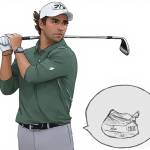
Most golfers want cleaner contact, tighter dispersion, and shots that feel effortless. Yet one of the most common swing faults destroys all three: overusing your upper body. When your arms, shoulders, and chest dominate your motion, your ball striking suffers immediately. Instead of creating a smooth, powerful sequence, you force the club through impact with tension and poor timing. Because your upper body takes over, clean contact becomes inconsistent, distance becomes unpredictable, and accuracy becomes unreliable.
Overusing the upper body seems natural at first. After all, your arms hold the club and your shoulders rotate. But golf isn’t powered from the top—it’s powered from the ground up. When your upper body leads instead of your lower body, everything works against you. The club loses space. Your rhythm collapses. Your angle of attack becomes steep. You lose rotation and replace it with lunging. The result is thin shots, fat shots, toe strikes, heel strikes, slices, hooks, and everything in between.
This article will show why overusing your upper body wrecks ball striking, how to recognize the signs, and what you can do to build a better swing sequence.
Why Overusing Your Upper Body Creates Poor Ball Striking
Overusing your upper body changes the physics of your swing. Golf is meant to flow from the ground into the core and then into the arms. When the upper body dominates early, that sequence flips. The downswing starts with your arms instead of your lower body. Because the incorrect sequence forces the club out of position, consistent contact becomes almost impossible.
When your upper body leads, the club tends to come over the top. That steep, across-the-ball path creates a slice pattern for many players. For others, the steepness sends the clubhead into the turf too soon, creating fat shots. Because the clubface usually opens during this motion, it also adds sidespin that ruins accuracy.
Additionally, upper body dominance adds tension. Tension reduces speed. Tension also prevents your wrists from releasing properly. Without proper release, the clubface remains unstable at impact. An unstable clubface produces erratic dispersion even on your best swings.
Overusing your upper body disrupts the natural chain reaction that creates power and consistency.
How Overusing Your Upper Body Creates a Steep Downswing
A steep downswing is one of the biggest consequences of upper body overuse. When you pull the club down with your arms, your shoulders tilt forward. That tilt sends the club over the ideal swing plane. Once the club goes steep, your hands move outward, and your path moves left of target.
Because the club approaches the ball from a steep angle, you lose the ability to strike the ball cleanly. You either hit behind it or cut across it. However, even when you catch the ball first, the contact feels harsh instead of smooth.
A shallow, powerful swing requires your lower body to start the downswing. When your lower body leads, your arms fall naturally into a slot that promotes an inside path. That inside path produces better compression, more effortless power, and tighter accuracy.
Overusing your upper body ruins that natural move.
How Upper Body Dominance Destroys Tempo and Rhythm
Tempo is the heartbeat of a consistent golf swing. When your upper body takes over, tempo disappears. You rush the transition. You yank the club down. You accelerate too early. These changes make it harder to time your release, square the clubface, or maintain balance.
Smooth tempo comes from allowing your lower body to set the rhythm. Because your legs create the initial movement, the rest of your body follows in sync. When your upper body jumps first, however, the lower body freezes. This disconnect creates a jerky, inconsistent motion.
Moreover, poor tempo increases tension. And tension ruins feel. Without feel, you can’t control trajectory or distance.
A golf swing with upper body overuse loses the very qualities that make ball striking consistent.
Why Overusing Your Upper Body Causes Loss of Rotation
Rotation creates power. Rotation also keeps the club traveling on a predictable arc. When your upper body dominates, you lose true rotation and replace it with lunging or sliding.
When players use too much upper body, they often throw their shoulders toward the ball. This forward motion reduces their ability to rotate fully. Instead of turning through impact, they slide past the ball. A slide disrupts balance and prevents clean contact.
Balanced rotation requires your hips to initiate the move. When your hips lead, your torso naturally unwinds. That unwinding gives your arms room to deliver the club from the correct angle. When your upper body leads, that room disappears.
Without proper rotation, your clubface timing becomes guesswork.
How Overusing Your Upper Body Creates Inconsistent Low Point Control
Low point control is essential for clean ball striking. When your upper body controls the swing, you lose the ability to hit the ball first and the ground second.
Here’s why:
Your spine tilts forward as you pull with your shoulders.
Your weight stays back because your hips don’t initiate the downswing.
Your hands race past your body too soon.
These three patterns move your low point around dramatically. Sometimes it stops behind the ball. Other times it moves too far forward. In many cases, it changes from shot to shot.
Lower body sequencing creates reliable low point control. Upper body overuse eliminates it.
Signs You Are Overusing Your Upper Body
You may not realize you’re overusing your upper body. Many golfers believe they need more arm speed or more shoulder turn. However, the symptoms of upper body dominance are easy to spot.
Look for patterns like:
You consistently hit fat shots or thin shots.
Your divots point left of target.
Your downswing feels rushed.
Your finish feels off balance.
Your shoulders open too soon.
Your arms feel tight and tired.
Your shots slice or pull frequently.
These issues almost always point back to upper body overuse.
Why Lower Body Sequencing Prevents Overusing Your Upper Body
Lower body sequencing is the antidote to upper body dominance. When your lower body starts the downswing, your upper body naturally falls into the correct position. Your hips rotate first. Your torso follows. Then your arms and club release into impact.
This chain reaction produces effortless power. Because the sequence stays smooth, tension melts away. You feel more control without trying harder.
Proper sequencing also positions the club on a shallower plane. That shallower plane leads to better contact, cleaner turf interaction, and more consistent distances.
When your lower body leads, your entire swing transforms.
How to Train Your Lower Body to Lead the Downswing
Training your lower body is easier than many golfers think. You don’t need complicated drills. Simple moves help you feel the correct sequence.
One effective move is the “step-through drill.” On the downswing, lift your lead foot slightly and step into the shot as the club swings down. This movement forces your hips to start first.
Another great drill is the “pump-and-turn drill.” Pause at the top, pump your arms halfway down using minimal effort, and then rotate your hips to complete the swing. This teaches your arms to wait while your hips lead.
You can also practice slow-motion swings focusing on hip initiation. Slowing down helps your brain absorb the new pattern.
With repetition, your lower body becomes your engine.
How Relaxation Helps Prevent Upper Body Overuse
Relaxation is a major factor in preventing upper body dominance. When you tense your arms and shoulders, your body instinctively relies on them for power. Tension signals your brain to use the wrong muscles.
Relaxation, however, frees your swing. Your arms become responsive instead of dominant. Your shoulders rotate without lunging. Your club flows rather than jerks.
Using slow breathing before each swing helps reduce tension. Shaking out your arms between shots also helps. When you feel relaxed, you’re more likely to use the correct sequence.
Relaxed golfers produce cleaner and more powerful ball striking.
Why a Stable Lower Body Improves Upper Body Timing
Stability allows your swing to generate power efficiently. A stable lower body gives your upper body a foundation to rotate around. Without stability, your upper body compensates by taking over the motion.
Stability comes from balance, posture, and grounded footwork. Strong legs support your rotation and prevent swaying. When your legs stay connected to the ground, your core supports your rotation. That support allows your upper body to move naturally rather than dominate.
Stability improves timing. Timing improves ball striking.
How Better Ball Striking Comes from Correct Sequencing
Ball striking improves dramatically when the upper body supports the swing instead of controlling it. When your lower body leads, several positive changes occur:
Your path becomes more consistent.
Your angle of attack becomes cleaner.
Your contact improves.
Your clubface control increases.
Your speed rises without extra effort.
Correct sequencing creates predictable shots, tighter dispersion, and more confidence.
Ultimately, better sequencing removes the chaos from your swing.
Developing Long-Term Consistency Through Lower Body Leadership
Consistency comes from repeatable patterns. When your lower body leads the motion, those patterns become easier to maintain. Your swing feels smoother. Your rhythm becomes more natural. You trust your motion far more.
Improved consistency reduces frustration. Reduced frustration increases motivation. The right sequence not only improves mechanics but also strengthens your mental game.
Keeping your lower body engaged helps you build a swing you can rely on under pressure.
Conclusion
Overusing your upper body is one of the most destructive habits in golf. It creates steep swings, inconsistent contact, poor rotation, unstable tempo, and unpredictable results. Yet the solution is more encouraging than most golfers realize. When you shift your attention to lower body sequencing, relaxation, and stability, your swing transforms. You create a smoother, more powerful, and more reliable motion. Clean, consistent ball striking becomes your new normal. Trust your lower body. Let your upper body support rather than dominate. Your game will immediately feel more balanced, more confident, and more explosive.
FAQ
1. Why does overusing my upper body ruin ball striking?
It disrupts sequencing, creates tension, and forces a steep path that leads to inconsistent contact.
2. How do I know if I’m using too much upper body?
Look for rushed transitions, slices, pulls, fat shots, and divots pointing left.
3. What’s the fastest way to fix upper body dominance?
Train your lower body to start the downswing through drills and slow-motion practice.
4. Does relaxing my arms help improve sequencing?
Yes. Relaxation reduces tension and helps your arms follow your hips instead of leading the swing.
5. How long does it take to retrain my sequence?
With consistent practice, many golfers see noticeable improvements within a few weeks.