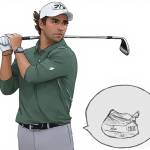
Golf ball striking consistency is the difference between hoping and knowing. When you stand over the ball and feel certain about contact, your entire game shifts. Confidence rises. Tension fades. Scores drop.
You have probably experienced both sides. One round, you flush your irons. The next, you hit thin shots, fat shots, and the occasional shank. It feels unpredictable. However, consistent ball striking is not random talent. It is trained precision.
Ball striking consistency means contacting the ball first, then the turf. It means compressing the ball with a square clubface and stable path. Most importantly, it means repeating that motion under pressure.
So how do you build it?
You do not chase positions. Instead, you train patterns. The right golf drills to improve ball striking consistency focus on low point control, face awareness, body rotation, and tempo.
Let’s break it down step by step.
Understanding Golf Ball Striking Consistency at Its Core
Before diving into drills, you must understand what actually creates consistent contact.
First, low point control. The lowest point of your swing arc must be in front of the ball. If it is behind, you hit fat shots. If your chest lifts early, you hit thin shots.
Second, face control. Even a centered strike will curve wildly if the face is open or closed.
Third, balance and rotation. Your body leads, the club follows. When arms dominate, timing becomes fragile.
Finally, tempo. Rushed transitions destroy sequencing.
Golf ball striking consistency is like building a house. If the foundation is shaky, everything above it wobbles. Fortunately, each of these elements can be trained.
Now let’s move into the best drills.
Low Point Control Drills for Golf Ball Striking Consistency
The Line-in-the-Sand Drill
This drill is simple yet powerful.
Draw a line in the sand at the range bunker. Set up with no ball. Your goal is to strike the sand on the target side of the line.
At first, many golfers hit behind the line. That reveals their low point is too far back. However, with repetition, you learn to shift pressure forward and rotate through impact.
This drill directly improves golf ball striking consistency because it trains correct turf interaction. Without solid low point control, consistency is impossible.
The Towel Drill
Place a folded towel about four inches behind your ball. Then hit short iron shots.
If you strike the towel, your low point is behind the ball. When you avoid it, you compress the ball properly.
At first, swing at 50 percent speed. Then gradually increase intensity. Over time, your brain calibrates where impact must occur.
Consistency begins to feel natural.
The Lead Foot Pressure Drill
Set up normally. Before starting your backswing, shift slight pressure into your lead foot.
Now hit controlled shots while maintaining that pressure through impact.
Why does this matter? Because stable lead-side pressure moves the low point forward. Consequently, ball-first contact becomes repeatable.
This is one of the most effective golf drills to improve ball striking consistency because it simplifies weight transfer.
Clubface Awareness Drills to Improve Ball Striking Consistency
Low point is critical. However, face control determines direction and curvature.
The Impact Bag Drill
Place an impact bag or pillow where the ball would be. Swing slowly and stop at impact.
Check three things:
- Hands slightly ahead of the clubhead
- Weight favoring lead side
- Clubface square to target
Although it feels static, this drill builds muscle memory. Over time, your impact alignments improve naturally.
The Gate Drill
Place two tees slightly wider than your clubhead in front of the ball. Your goal is to swing through without hitting the tees.
This trains centered strikes and face awareness simultaneously. If your face is open or path is off, you clip a tee.
As a result, your feedback is immediate.
Golf ball striking consistency improves dramatically when you combine low point control with face precision.
The Split-Hand Drill
Grip the club normally with your lead hand. Then slide your trail hand down the shaft several inches.
Make slow swings. This exaggerates proper sequencing and face control.
Because your hands are separated, flipping becomes difficult. Therefore, you learn to rotate your body instead of throwing the clubhead.
Body Rotation Drills for Reliable Ball Striking
Even with good intentions, many golfers stall their hips. When rotation stops, the hands take over.
The Step-Through Drill
Address the ball normally. Start your backswing. Then, as you swing down, step toward the target with your trail foot.
This promotes dynamic rotation and pressure shift.
It may feel exaggerated. However, exaggeration teaches your body the correct motion. Later, you refine it into a compact move.
Golf ball striking consistency depends on sequencing. This drill trains it beautifully.
The Alignment Stick Across Hips Drill
Place an alignment stick through your belt loops. Make slow swings.
Focus on rotating your hips so the stick points left of target at impact.
If the stick stays square, you likely stalled. When your hips open properly, space is created for your arms.
As a result, contact becomes crisp and repeatable.
The Chest-Over-Ball Drill
At impact, your chest should remain slightly over the ball.
Practice half swings while keeping your sternum in front of the ball through impact. This prevents early extension and lifting.
When your posture remains stable, golf ball striking consistency improves rapidly.
Tempo and Rhythm Drills That Build Consistency
Even solid mechanics collapse under poor tempo.
The 3-to-1 Count Drill
Count “one-two-three” in your backswing and “one” in your downswing.
This ensures your transition is not rushed. Many golfers yank the club from the top. Consequently, sequencing breaks down.
By slowing the backswing and accelerating smoothly, you build rhythm.
Consistent rhythm produces consistent contact.
Feet-Together Drill
Hit short iron shots with your feet touching.
Because your base is narrow, balance becomes essential. If you overswing, you lose stability.
This drill sharpens center contact. It also enhances awareness of body control.
The Metronome Drill
Use a metronome app set around 75 beats per minute.
Start your takeaway on one beat. Reach the top on the next. Strike the ball on the third.
While it sounds technical, it creates predictable timing. Golf ball striking consistency thrives on predictability.
Structured Practice for Long-Term Ball Striking Consistency
Drills are powerful. However, structure matters more.
Instead of hitting 100 random balls, create mini practice blocks.
For example:
- 10 swings with towel drill
- 10 swings focusing on low point
- 10 swings with gate drill
- 10 full shots combining feels
Transition between drills deliberately. Reflect after each set.
Moreover, alternate clubs. Consistency must transfer from wedges to mid irons to hybrids.
Another key factor is feedback. Use face spray or impact tape occasionally. Data accelerates learning.
Above all, stay patient. Golf ball striking consistency develops gradually. However, when it arrives, it stays.
Common Mistakes That Hurt Golf Ball Striking Consistency
Even with drills, certain habits sabotage progress.
First, overswinging. Power without control is useless. Slow down to gain speed.
Second, chasing positions. Golf is dynamic. Feel matters more than frozen checkpoints.
Third, practicing only perfect lies. Instead, vary conditions.
Fourth, ignoring short irons. Many golfers chase driver distance. Yet iron consistency lowers scores.
Finally, abandoning drills too quickly. Repetition wires patterns into your nervous system.
Consistency is not glamorous. It is built quietly.
Bringing Golf Ball Striking Consistency to the Course
Practice is controlled. The course is unpredictable.
Therefore, create a simple pre-shot routine.
Stand behind the ball. Visualize flight. Take one rehearsal focusing on low point. Then commit.
Avoid swing thoughts overload. Choose one cue. Perhaps “pressure left” or “smooth tempo.”
Trust your training.
Even if a shot goes wrong, respond calmly. Emotional swings damage mechanical consistency.
Over time, golf ball striking consistency becomes your identity. You no longer hope for solid contact. You expect it.
And expectation changes performance.
Conclusion: Build Repeatable Contact, Round After Round
Golf ball striking consistency is not mysterious. It is mechanical, trainable, and achievable. When you master low point control, face awareness, body rotation, and tempo, contact becomes predictable. Moreover, structured practice turns improvement into habit. Stay patient, commit to the drills, and focus on repetition over perfection. Soon, solid contact will feel routine, and your confidence will follow you to every tee box.
FAQs
- How long does it take to improve golf ball striking consistency?
Most golfers see noticeable improvement within four to six weeks of focused practice, especially when drills are done consistently three times per week. - Which drill improves ball striking the fastest?
The towel drill often produces quick results because it directly trains low point control and ball-first contact. - Should I practice these drills with every club?
Start with short irons. Then gradually apply the same drills to mid irons and longer clubs for full consistency transfer. - Can tempo alone improve ball striking consistency?
Tempo helps significantly. However, low point control and face alignment must also be trained for lasting results. - Is golf ball striking consistency more important than distance?
Yes. Consistent contact leads to predictable distance and accuracy, which ultimately lowers scores more than raw power alone.