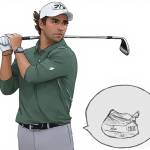
Every golfer has faced that frustrating question after a rough round: is it my clubs, or is it me? You hit one drive dead center, then slice the next two into the trees. You start wondering if your equipment is wrong or if your body’s just out of sync. It’s one of golf’s oldest mysteries — and understanding the answer can completely change your game.
The truth? It’s rarely just your clubs or just your body mechanics. The two are deeply connected. Your body influences how you swing the club, and your clubs influence how your body moves. When they work together, everything feels easy. When they don’t, golf becomes a guessing game.
Let’s break down how to tell whether your inconsistency comes from your equipment, your mechanics, or a mix of both — and what you can do to finally find your swing again.
Why Golf Clubs and Body Mechanics Are Interconnected
Think of your golf swing as a conversation between your body and your clubs. If your body isn’t delivering clear messages, your clubs can’t respond correctly. Likewise, if your clubs don’t fit you, your body has to make awkward adjustments just to make contact.
Your golf clubs are designed to work with your posture, tempo, and strength. When the specs — like shaft flex, lie angle, or grip size — don’t match your body, your natural motion gets disrupted. Your body compensates in subtle ways, throwing off balance and rhythm.
On the flip side, even perfectly fitted clubs can’t save poor mechanics. If your rotation, posture, or tempo is off, the clubface will never return squarely to the ball. It’s like owning a perfectly tuned piano but not knowing how to play a note.
To find the real issue, you have to look at both sides of the equation.
When It’s the Clubs: Signs Your Equipment Might Be the Problem
Sometimes, the issue isn’t your swing at all — it’s your gear fighting against you. If your clubs aren’t suited to your body or skill level, you’ll struggle no matter how smooth your motion feels.
Here are some telltale signs that your clubs may be holding you back:
1. Inconsistent Ball Flight for Good Contact
If you’re striking the ball solidly but getting erratic results — like a push one hole and a hook the next — your lie angle or shaft flex could be off.
When the club’s lie angle is too upright or too flat, it changes the direction of your ball flight. Similarly, shafts that are too stiff or too soft can alter launch angle and spin.
2. The Clubs Feel Heavy or Too Light
Your body relies on feel for timing. If your clubs are too heavy, your tempo slows down, and your release lags. If they’re too light, you might swing too fast and lose control.
Swing weight matters more than most golfers realize. It influences balance, rhythm, and even your energy levels throughout a round.
3. Difficulty with Consistent Distance Gapping
Do your short irons fly too far or your hybrids go nowhere? Poorly matched lofts or shaft profiles can create unpredictable distance gaps.
Modern club technology helps, but only if the specs fit your swing speed and launch pattern.
4. Pain or Discomfort During Play
If your clubs are forcing your body into unnatural positions, you might feel soreness in your wrists, back, or shoulders after playing. That’s often a sign that your lie angle, length, or grip size doesn’t suit your build.
Pain isn’t part of golf — it’s a message that something’s mechanically mismatched.
5. You Struggle to Square the Clubface
If your grip and stance are sound but you can’t get the face square at impact, your clubs might have the wrong offset or shaft characteristics.
The wrong clubhead design or shaft kick point can cause open or closed clubface tendencies that mimic swing flaws.
When It’s the Body: Signs Your Mechanics Are the Issue
Even the best clubs can’t fix a body that’s out of sync. Mechanical flaws often hide behind inconsistent results, tempting you to blame the equipment. But the real culprit might be posture, rotation, or sequencing.
Here are the most common mechanical causes of inconsistency:
1. Poor Posture and Setup
If your stance is too upright, too bent, or your spine angle changes during the swing, you’ll struggle to make solid contact.
Good posture creates balance and consistency. A weak setup — rounded shoulders, locked knees, or uneven weight distribution — throws everything off before you even start your backswing.
2. Lack of Rotation
Golf is powered by rotation, not arm movement. When your hips and shoulders don’t turn properly, you lose both distance and control.
Restricted rotation usually comes from tightness in the core, hips, or upper back. Stretching and mobility work can dramatically improve your swing plane.
3. Overusing the Arms
Many golfers try to guide the ball with their hands instead of turning through with their body. That’s how slices, hooks, and tops happen.
The body should lead, and the arms should follow. When your sequence is reversed, timing and impact suffer.
4. Poor Balance and Weight Shift
A strong swing keeps the center of gravity stable. If you sway back or lunge forward, you’re not rotating around your spine — you’re moving laterally.
Balance drills and footwork training can help you stay centered and consistent.
5. Inconsistent Tempo
The tempo of your swing — the rhythm between backswing and downswing — is your body’s natural clock. If it changes from shot to shot, your timing will always be off.
A smooth tempo builds trust between mind and body. Overthinking mechanics mid-swing almost always breaks that rhythm.
The Perfect Storm: When Both Clubs and Mechanics Are Misaligned
Here’s where most golfers find themselves — somewhere in between. Your clubs don’t fit quite right, and your body mechanics have adapted poorly as a result.
For example, if your clubs are too long, you might unconsciously stand more upright, limiting rotation. If they’re too stiff, you might over-swing just to generate distance. Over time, these compensations become ingrained habits that distort your mechanics.
This is why even seasoned players sometimes lose consistency when switching to new equipment. Their old habits were built around their old clubs, not proper form.
To fix this, you need to address both sides — by getting fitted correctly and refining your fundamentals.
How a Club Fitting Can Reveal the Truth
A professional club fitting is one of the fastest ways to identify whether your equipment is helping or hurting you.
Fitters analyze swing speed, ball flight, launch angle, and spin rate to match clubs to your motion. But here’s the secret: a good fitter can also spot mechanical flaws. They’ll see if your equipment is compensating for poor technique — or if your technique is compensating for poor equipment.
For instance, if you consistently hit shots low on the face, it might indicate clubs that are too long. But if your posture is off, you might be striking low regardless of equipment. The fitting data helps pinpoint which factor is to blame.
Think of it like a diagnostic check for your game — a way to separate physical habits from equipment variables.
Simple Ways to Test Your Equipment at Home
You don’t need a high-tech lab to spot red flags in your clubs. Try these simple checks:
- Check your divots: Are they deeper on one side? That suggests the lie angle might be off.
- Evaluate your grips: If they feel too big or too small, it affects your hand placement and release.
- Swing with eyes closed: If you lose balance, the club’s weight or length might not match your posture.
- Track distance patterns: Big distance gaps between clubs hint at poor loft progression or shaft mismatch.
These quick self-tests won’t replace professional fitting, but they can point you in the right direction.
Fixing the Body: Restoring Mechanics and Control
Even if your clubs are perfect, your body mechanics must support them. Every great swing begins with balance, tempo, and coordination — not raw power.
Here are key focus areas to rebuild your foundation:
1. Posture and Alignment Drills
Set up with your spine straight, knees slightly bent, and arms hanging naturally. Use a mirror or alignment stick to check your angles.
When your setup is neutral, your body moves freely — allowing the club to return square without manipulation.
2. Core Strength and Mobility
Your core drives rotation. Simple exercises like planks, torso twists, and hip stretches can restore range of motion and stability.
A mobile core equals smoother turns and more consistent contact.
3. Weight Transfer and Balance
Practice hitting half-swings while focusing on staying balanced through impact. Your weight should shift naturally to your front foot without swaying.
Balance creates repeatability — the true secret to consistency.
4. Rhythm and Tempo Training
Try swinging to a three-count rhythm: “one” on takeaway, “two” at the top, “three” through impact.
Consistent tempo keeps your timing reliable, no matter what club you’re using.
How to Blend Equipment and Mechanics for Peak Performance
The best golfers don’t separate mechanics from equipment — they blend them. They build swings around properly fitted clubs and refine those swings through awareness and feedback.
Here’s how you can do the same:
- Get a professional fitting: Make sure your clubs match your current ability and swing style.
- Take a lesson afterward: Work with a coach to adjust your posture and sequencing to fit your new equipment.
- Record your swing: Video analysis helps identify whether changes are due to body mechanics or club response.
- Practice with purpose: Focus on body awareness, not just ball flight. Your consistency will skyrocket.
When your equipment and mechanics finally align, golf feels effortless. You’ll strike the ball more purely, gain confidence, and rediscover the rhythm that keeps you in control.
Conclusion
So, is it your clubs or your body mechanics? In most cases, it’s both — a miscommunication between equipment and movement. Your clubs might be asking for one thing while your body delivers another.
The good news is, once you understand how they interact, you can fix the problem from both ends. Get fitted for the right gear, refine your mechanics, and build a partnership between mind, body, and equipment.
When everything syncs, golf stops feeling like a struggle and starts feeling like a symphony — one where every swing strikes the perfect note.
FAQ
1. How do I know if my clubs are the wrong fit?
If your shots feel solid but fly inconsistently, or you experience discomfort, your clubs might not fit your body or swing.
2. Can poor body mechanics cause bad contact even with fitted clubs?
Yes. Even with custom-fitted clubs, poor posture, rotation, or balance will lead to mishits and inconsistent strikes.
3. Should I get fitted before fixing my swing?
It’s best to do both. A fitting gives you baseline data, while lessons help you adapt proper mechanics to your fitted clubs.
4. How often should I get refitted for clubs?
Every 2–3 years, or after major swing changes. Your body and technique evolve, and your clubs should evolve with them.
5. Can improving flexibility help my swing mechanics?
Absolutely. Better flexibility improves rotation, posture, and rhythm — key elements of a consistent, powerful golf swing.