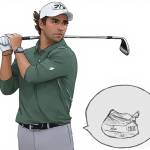
Get Stronger, Not Bigger—Swing Harder, Not Heavier
Want to hit the ball farther, stay pain-free, and boost consistency—without turning into a bodybuilder? You’re in the right place. Strength training for golfers without bulking up focuses on building lean, powerful muscle that improves swing speed, posture, and endurance—without unnecessary size. This guide shows you exactly how to get stronger for golf the smart way.
Why Golfers Need Strength Training
Contrary to popular belief, golfers are athletes. Your swing requires explosive power, core stability, and body awareness. Strength training sharpens all of that without turning you into a bodybuilder.
Key benefits include:
- Increased swing speed and distance
- Better balance and body control
- Lower risk of back, shoulder, and elbow injuries
- Improved endurance during long rounds
How to Train for Strength—Without Bulking Up
To gain strength (not size), your workouts should follow a few simple rules:
- Focus on compound movements—Work multiple muscle groups at once
- Use moderate weights + lower reps—Think 3–6 reps, not 10–15
- Train explosively and with intent—Move the weight with control, not momentum
- Prioritize mobility and stability alongside strength
Tip: Keep your rest times short and your sessions under an hour. Golfers benefit more from power and control than hypertrophy.
The Golf Strength Workout Blueprint
Here’s a breakdown of strength exercises that support your golf game without adding bulk. Perform 2–3 times per week on non-consecutive days.
1. Goblet Squats (3 sets of 6–8 reps)
Why it works:
Builds leg strength for stability and power transfer during your swing.
How to do it:
- Hold a dumbbell or kettlebell at chest height
- Squat slowly, keeping your heels down and chest up
- Push through your feet to return
2. Romanian Deadlifts (3 sets of 6 reps)
Why it’s a must:
Strengthens the hamstrings and glutes—critical for driving through the ball and protecting the lower back.
Form focus:
- Use dumbbells or a barbell
- Keep your spine neutral
- Hinge from the hips, not the waist
3. Split Squats (3 sets of 6 reps per leg)
Why golfers love it:
Trains one leg at a time—improving balance and mimicking your swing stance.
How to do it:
- Step one foot back into a lunge
- Lower with control
- Push through front heel to stand
4. One-Arm Dumbbell Rows (3 sets of 6–8 reps per side)
Why it works:
Builds upper back strength for posture and club control.
How to do it:
- Support yourself with one hand on a bench
- Pull the dumbbell toward your hip
- Keep elbow close and avoid twisting
5. Cable or Band Rotations (3 sets of 10 reps per side)
Why it’s perfect for golf:
Mimics swing rotation and builds strength through your core.
Pro tip: Keep hips square and let your torso do the work.
6. Push-Ups or Chest Press (3 sets of 8–10 reps)
Why it matters:
Strengthens the chest and triceps, which help control the club through impact.
Make it easier or harder:
- Start with incline push-ups
- Progress to floor push-ups or dumbbell press
7. Plank Variations (2 sets of 30–60 seconds)
Why it’s essential:
Builds total-body stability and core control—key for consistent swings.
Try this:
- Forearm planks
- Side planks
- Planks with shoulder taps
Weekly Strength Training Plan for Golfers
Start with – Strength + Core
- Start with Goblet Squats to build leg power and control.
- Follow up with One-Arm Rows to strengthen your back and improve posture.
- Then, use Band Rotations to activate your core and mimic swing movements.
- Finish the session with Planks to enhance full-body stability.
Then – Balance + Stability
- Perform Split Squats to train one leg at a time and boost balance.
- Add Romanian Deadlifts to target your hamstrings and protect your lower back.
- Include Push-Ups for upper-body strength and control at impact.
- Wrap up with Side Planks to strengthen your obliques and improve rotational control.
Finish – Full-Body Review
End with light cardio, stretching, or mobility work.
Combine moves from Day 1 and Day 3 in a light circuit.
Keep reps low and focus on quality over quantity.
Common Concerns: Debunked
“I don’t want to get bulky.”
You won’t—unless you’re eating and training like a bodybuilder. This plan focuses on functional strength, not size.
“I’m not comfortable lifting heavy weights.”
Use resistance bands, light dumbbells, or even just body weight. Form matters more than how much you lift.
“I’m a senior golfer—can I still do these?”
Absolutely. Start slow, reduce weight, and focus on form. Strength training helps extend your playing years.
Conclusion
Strength training doesn’t have to mean bulking up or spending hours in the gym. For golfers, it’s about building functional power, control, and endurance. By focusing on smart, efficient movements a few times a week, you’ll unlock more speed in your swing, protect your joints, and feel better both on and off the course.
Train smart, swing harder, and play longer—without getting bulky.
FAQs
- Will lifting weights make my swing stiff?
Not if you stretch and train with proper form. Strength supports mobility when done correctly. - What’s the best time of year to start strength training for golf?
Off-season is ideal, but anytime is the right time to build a better foundation. - Can I do strength and cardio on the same day?
Yes, but keep strength training first if performance is your focus. - Do I need a gym membership?
Not necessarily. Dumbbells, resistance bands, and bodyweight moves at home work just fine.
How soon will I notice results in my swing?
With consistent training, expect noticeable improvements in power and control within 4–6 weeks.