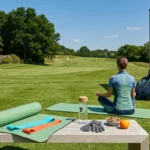
The mental game in golf is as critical as the physical, and one often-underestimated tool to sharpen your focus and manage pressure is breathwork. Incorporating specific golf breathing exercises can help you calm your nerves, maintain concentration, and execute shots under pressure. When stress builds, our breathing becomes shallow and rapid, triggering a fight-or-flight response that hinders clear thinking and smooth motor control. Learning to control your breath can reverse this, bringing you back to a state of calm readiness. Therefore, understanding these techniques is vital for any golfer.
The Power of Golf Breathing Exercises
Deep, diaphragmatic breathing activates the parasympathetic nervous system, responsible for rest and digestion. This effectively counteracts the sympathetic nervous system, which governs stress responses. By consciously slowing and deepening your breath, you can lower your heart rate, reduce muscle tension, and improve oxygen delivery to your brain. This translates to enhanced decision-making, better shot execution, and a more composed demeanor, especially during critical moments on the course like facing a tough putt or a challenging tee shot. Moreover, consistent practice cultivates resilience.
Consider how many times a round is impacted by a single moment of pressure. A crucial drive, a delicate chip, or a long putt can feel overwhelming. Without a reliable method to manage these feelings, golfers often succumb to tension, leading to errant shots. Breathwork provides that method. It’s a proactive strategy, allowing you to regain control even before anxiety fully takes hold. Consequently, your overall enjoyment of the game will increase significantly.
Understanding the Mind-Body Connection in Golf
Golf is unique in its demand for both physical precision and mental fortitude. The connection between your mind and body is never more apparent than on the golf course. A tense mind leads to a tense body, which in turn restricts your swing and impacts your touch. Conversely, a calm mind allows for fluid motion and precise execution. This is where dedicated breathing techniques for golf become indispensable. They bridge the gap between your mental state and your physical performance.
Many top athletes across various sports utilize breath control for peak performance. Golfers, in particular, benefit from this because of the sport’s stop-and-go nature, which offers ample opportunities to reset and refocus. Between shots, while walking to the next tee, or even as you stand over the ball, a few mindful breaths can make all the difference. Furthermore, it’s a skill that improves with practice, just like your swing mechanics.
Practical Breathing Techniques for Golfers
Here are two simple yet powerful breathing exercises you can practice and apply during your round. These techniques are designed for immediate impact and long-term benefit.
- Diaphragmatic Breathing (Belly Breathing): Sit or stand comfortably. Place one hand on your chest and the other on your belly. Inhale slowly through your nose for a count of four, feeling your belly rise while your chest remains relatively still. Exhale slowly through your mouth for a count of six, feeling your belly fall. Focus on making your exhale longer than your inhale. Practice for 2-3 minutes before your round and between shots. This technique, also known as abdominal breathing, is fundamental for relaxation.
- Box Breathing (Four-Square Breathing): This technique helps to regulate your breath and bring immediate calm. Inhale slowly for a count of four. Hold your breath for a count of four. Exhale slowly for a count of four. Hold your breath (lungs empty) for a count of four. Repeat this cycle several times. Use this before a crucial shot or when you feel tension rising. It’s particularly effective for moments requiring intense focus.
By consistently practicing these golf breathing exercises, you’ll develop a powerful internal mechanism to manage stress and maintain a sharp, focused mind throughout your entire round, leading to more enjoyable and successful golf experiences. These methods are simple, yet profoundly effective.
Integrating Breathwork into Your Golf Routine
The key to success with any new habit is integration. Start by dedicating a few minutes each day to practice these breathing techniques, perhaps during your morning routine or before a practice session. As you become more comfortable, begin to incorporate them into your pre-round warm-up. For instance, take five minutes before you even step on the first tee to do some diaphragmatic breathing. This sets a calm tone for your entire round.
During the round, identify specific moments where you can apply these techniques. For example, after a challenging hole, take a few box breaths as you walk to the next tee. Before a critical putt, engage in a single cycle of diaphragmatic breathing. The more you practice, the more natural and automatic these responses will become. Consequently, your ability to perform under pressure will improve significantly.
Consider also how these practices fit into your broader The Complete Player Program: Unlock Power, Precision, and Confidence.. A holistic approach to golf includes mental preparation just as much as physical conditioning and skill development. Breathwork is a cornerstone of this mental preparation. It complements physical training by enhancing your ability to execute learned movements with precision and composure.
Beyond the Course: Daily Benefits of Breathwork
The advantages of mastering breath control extend far beyond the golf course. Regular practice of these techniques can reduce overall stress in your daily life, improve sleep quality, and enhance general well-being. This creates a positive feedback loop: a calmer, more focused individual off the course will naturally bring that same composure to their golf game. Therefore, these are not just golf breathing exercises; they are life-enhancing skills.
Many resources are available to deepen your understanding of breathwork. For example, the American Lung Association provides valuable information on the benefits of deep breathing. Furthermore, integrating mindful practices into your daily routine can significantly impact your overall health. Learn more about breathing exercises from the American Lung Association.
Think about how your mindset affects other aspects of your life. When you feel overwhelmed, shallow breathing is often a symptom. By consciously taking control of your breath, you can regain a sense of calm and clarity in any situation, not just on the golf course. This makes breathwork a truly versatile tool for personal development.
Enhancing Performance with Mindful Breathing
Mindful breathing is about being present and aware of your breath, moment by moment. On the golf course, this means not just performing the exercises, but also paying attention to your natural breath throughout the round. Notice when your breath becomes shallow due to tension. This awareness is the first step toward regaining control. By simply observing, you create a space to choose a different response.
For instance, before every shot, take a moment to feel your feet on the ground and take one deliberate, deep breath. This simple act can ground you and bring your focus to the present task. It helps to quiet the internal chatter that often plagues golfers. This focused presence is a powerful ally in executing consistent shots. It also helps in making better decisions, such as choosing the right Golf Clubs for a particular lie.
Moreover, consistent practice of these techniques can improve your overall concentration. You’ll find yourself less distracted by external factors – the wind, playing partners, or even a bad previous shot. Your attention will be more firmly rooted in the task at hand, which is crucial for lowering scores and enjoying the game more fully. Research on the benefits of mindfulness and meditation further supports these claims.
Advanced Applications and Consistency
Once you are comfortable with the basic golf breathing exercises, you can explore more advanced applications. For example, some golfers find benefit in visualizing their breath flowing through their body, releasing tension with each exhale. Others might coordinate their breath with their pre-shot routine, using the inhale to gather focus and the exhale to release tension just before starting their swing.
The key, as with any skill in golf, is consistency. Irregular practice will yield inconsistent results. Make breathwork a non-negotiable part of your golf preparation and in-round strategy. Even on days when you feel great, practicing these techniques reinforces the habit and ensures they are readily available when you truly need them. This dedication will pay dividends in your performance and enjoyment.
Furthermore, consider incorporating these practices into your general fitness routine. Many forms of exercise, like yoga and Pilates, emphasize breath control. By strengthening your diaphragm and improving your lung capacity through various physical activities, you’ll naturally enhance your ability to perform golf breathing exercises effectively. This holistic approach supports all aspects of your well-being, both on and off the course.
Conclusion
Mastering golf breathing exercises offers a profound advantage on the course. They are not merely relaxation techniques, but powerful tools for mental control, performance enhancement, and stress reduction. By integrating diaphragmatic and box breathing into your routine, you gain the ability to calm your nerves, sharpen your focus, and execute shots with greater precision under pressure. This translates directly to more consistent play and a more enjoyable golf experience. Start practicing today, and feel the difference a composed mind can make in your game. Remember, a better breath leads to better golf.
FAQ Section
How do breathing techniques help my golf game?
Breathing techniques help by activating your parasympathetic nervous system, which calms the body and mind. This reduces heart rate, lowers muscle tension, and improves oxygen flow to the brain, leading to better focus, decision-making, and execution of shots under pressure.
When should I use these mindful breathing practices during a round?
You can use them strategically: before your round to set a calm tone, between shots, after a challenging hole to reset, or specifically before a crucial shot like a difficult putt or tee shot when you feel tension rising. Consistency is key.
Are there any specific breathing methods recommended for golfers?
Yes, two highly effective methods are Diaphragmatic Breathing (Belly Breathing), which focuses on deep, slow breaths using your diaphragm, and Box Breathing (Four-Square Breathing), which involves equal counts for inhaling, holding, exhaling, and holding again. Both promote calm and focus.
Can these breath control methods improve my overall well-being off the course?
Absolutely. Regular practice of breath control can significantly reduce daily stress, improve sleep quality, and enhance overall mental clarity and emotional regulation. The benefits extend far beyond your time on the golf course, contributing to a more balanced life.
How often should I practice these focused breathing exercises?
For best results, practice daily for a few minutes, even when you’re not playing golf. This builds the habit and strengthens your ability to use the techniques effectively when you need them most on the course. Consistent practice leads to lasting benefits.